

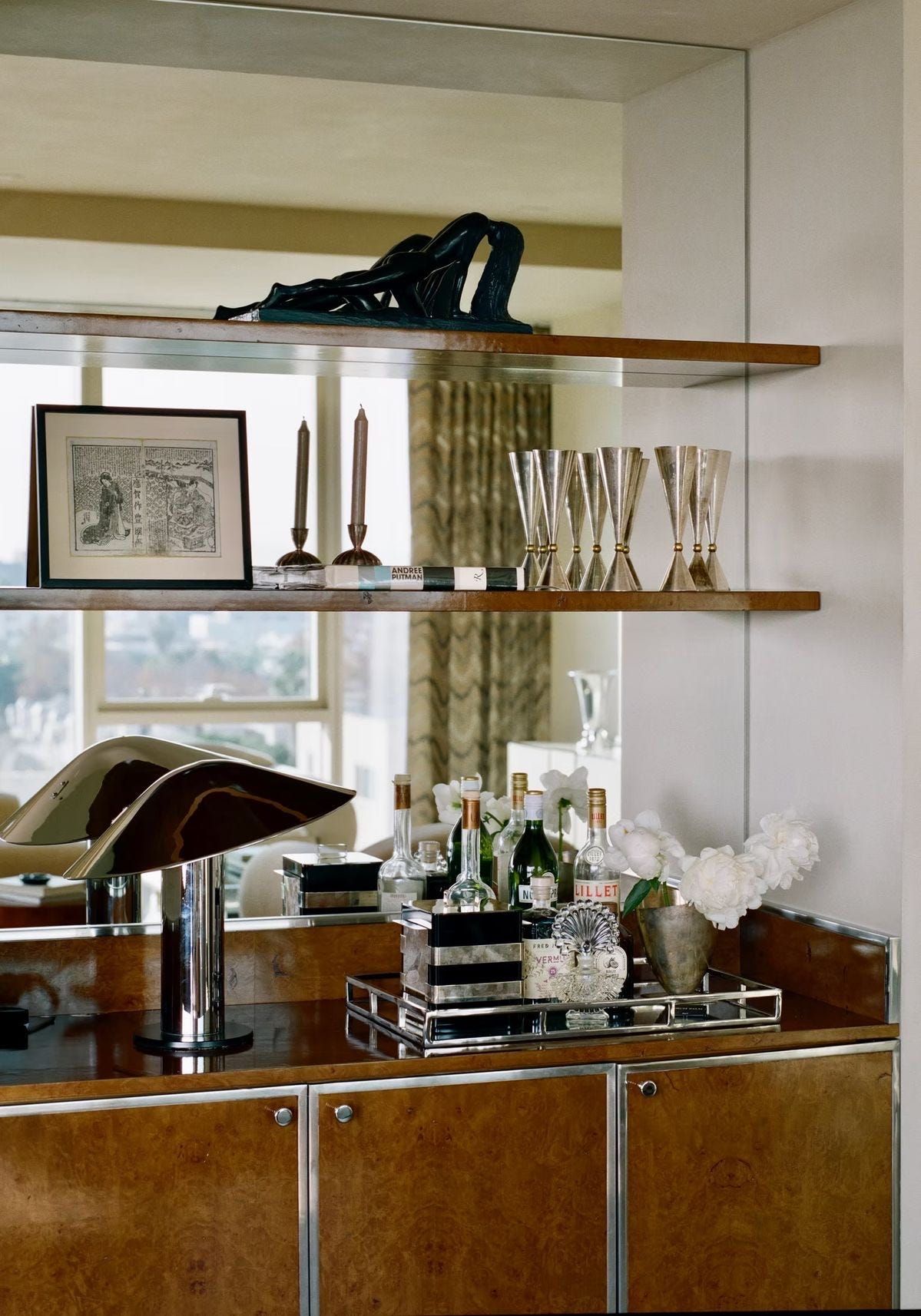
Why cool metals feel right again, plus twelve pieces worth noticing.

Okay, so hear me out: chrome feels right again.
And not in a “everything old is new again” way. More like, after years of warm wood, boucle, and earth tones, a reflective surface is finally giving us some relief. Those things aren’t over (they’re not), but interiors need tension to actually work. And cool metals deliver it without even trying.
Chrome, nickel, aluminum. They’ve obviously been here before. But the way they’re showing up now? Different. Less nostalgia, more structure. Less accent, more anchor.

Chrome: The One That Never Really Left
Chrome hit its stride in the 1920s through the ‘40s, when everyone was obsessed with machines, speed, and what the future could look like. It showed up everywhere: tubular steel chairs, barware, lighting. Art Deco loved it. So did the Bauhaus folks experimenting with bent steel.
The appeal was both visual and practical. Chrome resists corrosion, so it lasts. But more importantly? It reflects. It erases mass. A chrome frame can hold up a heavy marble top and somehow make the whole thing feel like it’s floating.
Today, designers are using chrome with more weight behind it. Chunky frames instead of thin tubing. Sculptural legs that actually want to be noticed. The Chromeo Chair does this really well: thick tubular steel that reads as structure, not ornament. Pair it with travertine or smoked glass or textured plaster. It’s not trying to disappear anymore.
Aluminum: The Experimental One
Aluminum entered the scene in the ‘30s as the “new” material: lightweight, malleable, modern. Bauhaus designers loved it because it was honest. You could bend it, cast it, leave it raw. It didn’t pretend to be anything else.
By midcentury, aluminum was everywhere. Sculptural furniture in the ‘70s leaned into its industrial quality, often leaving it brushed or anodized. It wasn’t trying to be precious, and that was the whole vibe.
Now it’s back in a similar spirit. The Domino Bookshelf uses aluminum sculpturally: chunky, textured, unapologetic. It plays well with brutalist-inspired interiors and spaces that want material honesty over polish.

Nickel: The Quieter Option
Nickel came first. Before chrome plating became widely available, nickel was the refined choice for hardware, fixtures, and furniture accents. It has this softer, warmer sheen. Less mirror, more matte. It doesn’t scream for attention, which is kind of the point.
It saw a revival in the ‘30s through the ‘50s, especially in high-end residential and hospitality spaces. Designers liked it because it felt timeless instead of trendy. It aged well. It didn’t compete with everything else in the room.
That’s still why people reach for it now. Nickel gives you all the contrast and structure of a cool metal without the flash. The Forme 30 Shelf Bracket in polished nickel is a perfect example. Architectural, but restrained. It works in spaces that want precision without feeling cold.
Why Now
This isn’t a trend cycle. It’s a correction.
Interiors have been soft for a while now. Warm, rounded, tactile. All good things! But without contrast, they flatten out. Cool metals bring sharpness. They reflect light instead of absorbing it. They create visual weight in a way that feels grounded, not heavy.
And the way they’re being used now is different too. Less about thin accents tucked into corners, more about bold, sculptural forms that hold their own. A chrome coffee table base that looks like a piece of architecture. A Nocture Table Lamp with ribbed aluminum that reads as an object first, lighting second. An Echo Folding Screen that divides space without apologizing for it.
They’re not here to soften anything. They’re here to hold the room together.
A Few Worth Noticing
If you’re looking to bring cool metals into your space, start with the functional stuff. The Alessi 1-Cup Stovetop Coffeemaker by Michele De Lucchi is aluminum at its best: sculptural, honest, useful. Same with the Fauna Toilet Roll Holder. It’s chrome hardware that feels like a small flex.
For the table, the Hammered Silver Ice Bucket & Tongs or the Small Candelabra by Six Dots Design bring in texture without any fuss. The Hug Ashtray works even if you don’t smoke (I just like how it looks).
And if you want something with more soul, the Punched Tin Hacienda-Style Mirror brings in craft and history. It’s a good reminder that cool metals don’t have to feel industrial to work.
Shop the Edit
Further reading:
Apartment Therapy: Why the 1920s and 1930s Were So Chrome
Gubi: The Return of Chrome
Art Deco Society: There’s No Plate Like Chrome
Design Within Reach: The History and Impact of the Bauhaus
Dezeen: 10 Iconic Bauhaus Furniture Designs


Leave a Reply